Why Get Your Hearing Tested?
Addressing hearing changes promptly means you can continue enjoying conversations, music, and the world around you. But hearing tests are not just for those with obvious hearing loss; they’re for anyone who wants to protect and enhance their quality of life.
Even if it turns out that your hearing health only needs monitoring, not intervention, you can rely on our expert team to help you navigate hearing health challenges as they come, no matter what you need to succeed.
What to Expect During Your Hearing Test
Your comfort and confidence matter. From the moment you arrive, you can rest assured that your needs and concerns are our priority.
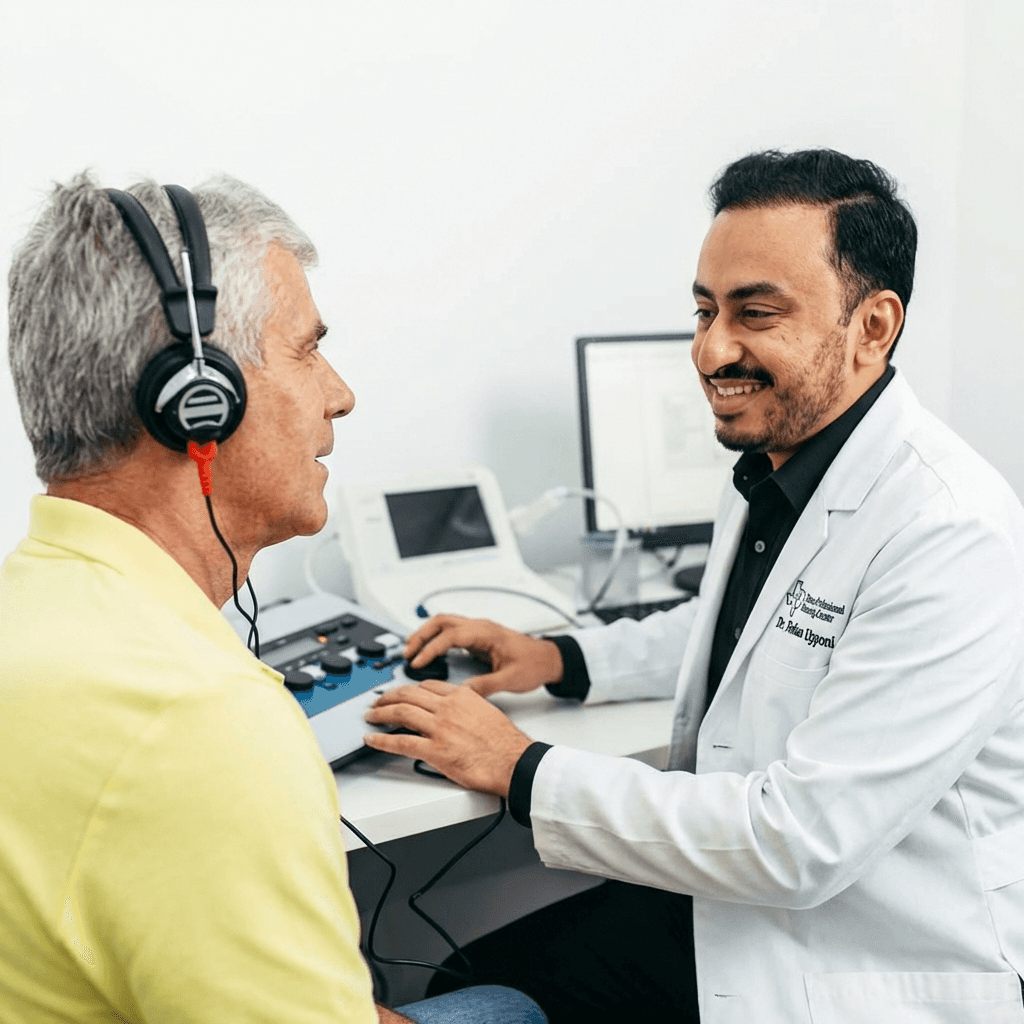
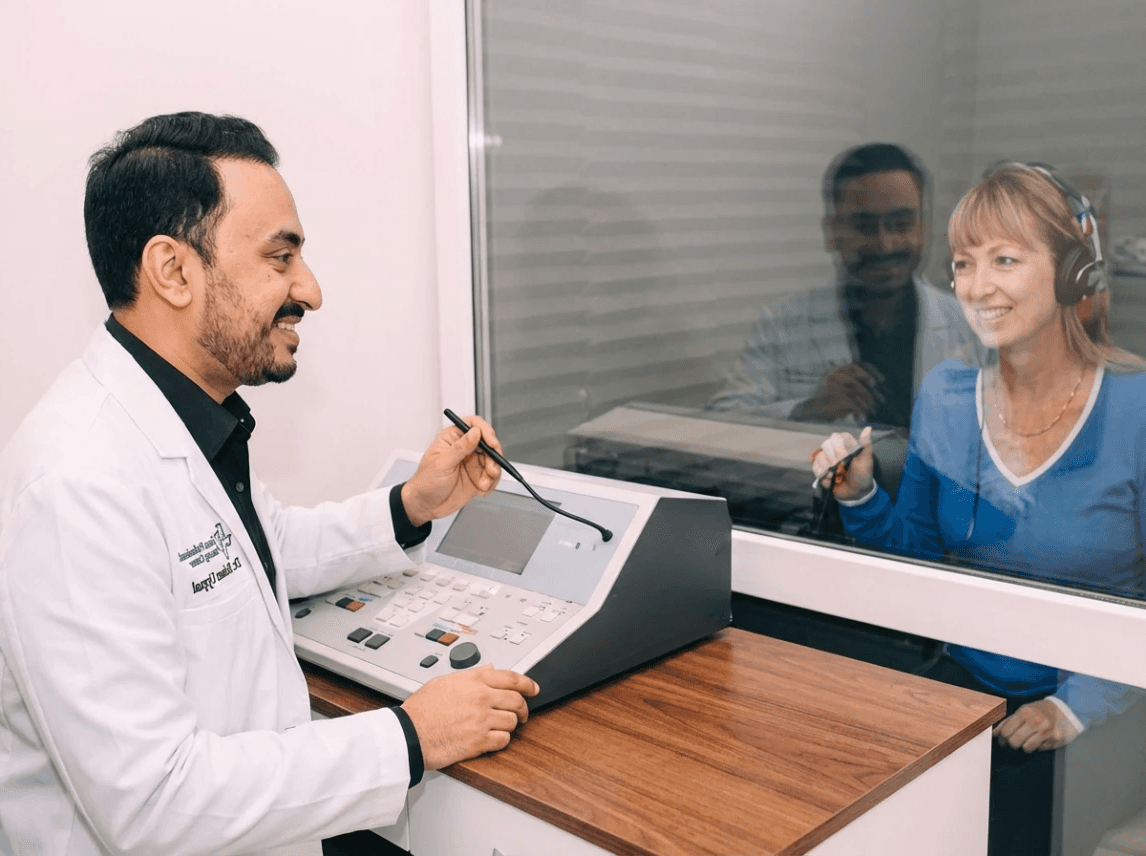
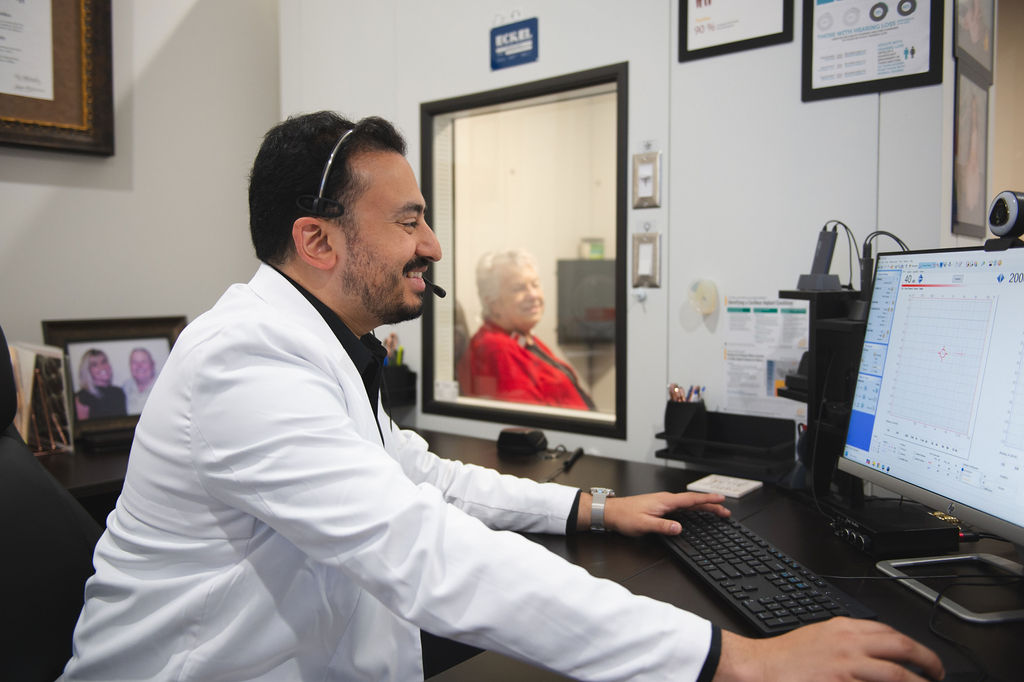
A comprehensive hearing test involves several painless and noninvasive assessments, each providing valuable insight into your hearing health.
After a brief conversation about your hearing health needs and a physical examination of your ears to check for infection or earwax blockages (which we can take care of for you if we find them!), your hearing assessment will be composed of several different evaluations depending on what your ears need.
Tympanometry
Tympanometry evaluates how well your middle ear transmits sound. Equal pressure on both sides of your eardrum means your hearing system is working as it should.
Tympanometry can also be used if you experience tinnitus, offering further understanding of your ear health.
Bone Conduction Testing
Bone conduction testing is a simple, quick, and painless way to evaluate your hearing.
A small device sends gentle vibrations directly to your inner ear, bypassing the outer and middle ear.
This allows our team to pinpoint the exact site of any hearing problem, ensuring you receive the most accurate diagnosis and the best treatment plan tailored to your needs.
Air Conduction Testing
Air conduction testing measures your auditory sensitivity and is often the first step in identifying hearing loss.
During this assessment, sound vibrations travel through your outer, middle, and inner ear to your eardrum.
You benefit from knowing exactly where any obstructions or issues may be, as this test effectively pinpoints the level and type of hearing loss you may have.
Speech Testing
Understanding how you process speech is vital for your daily life. Several speech tests help assess your ability to recognize and understand words in different situations:
Speech Recognition Threshold (SRT): You’ll listen to words at various volumes to determine the quietest level at which you can recognize speech.
Most Comfortable Listening Level: This test identifies the sound level you find most pleasant for activities like listening to music or watching TV.
Most Uncomfortable Listening Level: Starting from your preferred volume, the sound increases until it becomes uncomfortably loud, helping to define your upper tolerance.
Word Recognition Test: You’ll hear simple, one-syllable words at your comfortable listening level to measure how well you understand speech.
Speech in Noise (Quick SIN): This assessment measures how well you distinguish speech from background noise, reflecting real-world listening environments.
Will a hearing assessment show if my hearing loss is permanent or just temporary?
You’ll receive a comprehensive evaluation that distinguishes between temporary issues, like earwax buildup or middle ear infections, and permanent hearing loss. Your results guide you to the right next steps, whether that’s medical treatment or hearing solutions.
Can hearing assessments detect the cause of my tinnitus (ringing in the ears)?
I’m worried about being told I need hearing aids. Will I be pressured to buy something?
What if I only have trouble hearing in noisy places, not in quiet ones?
If I’m nervous or anxious, will that affect my results?
Can I bring someone with me to the appointment?