
High Standards, Personalized Care and Testing
We’re proud to be among a select few clinics nationwide equipped with innovative neuro-diagnostic testing. This advanced technology allows us to pinpoint the exact cause of your symptoms and create a treatment plan tailored just for you.
As a certified Center for Excellence with the American Institute of Balance, Texas Professional Hearing Services uses the same leading-edge equipment and protocols as top institutions like the Mayo Clinic.
With our team, you can trust that you’re receiving the highest standard of care available.
Why Choose Neuro-Diagnostic Testing?
The vestibular system is intricate and responsible for much more than just balance. Our comprehensive testing protocols go beyond standard X-rays or CT scans.
To understand what’s causing dizziness or hearing loss, we use a series of in-depth tests. These measure everything from eye and head movements to hearing function, helping us get to the root of your concerns.
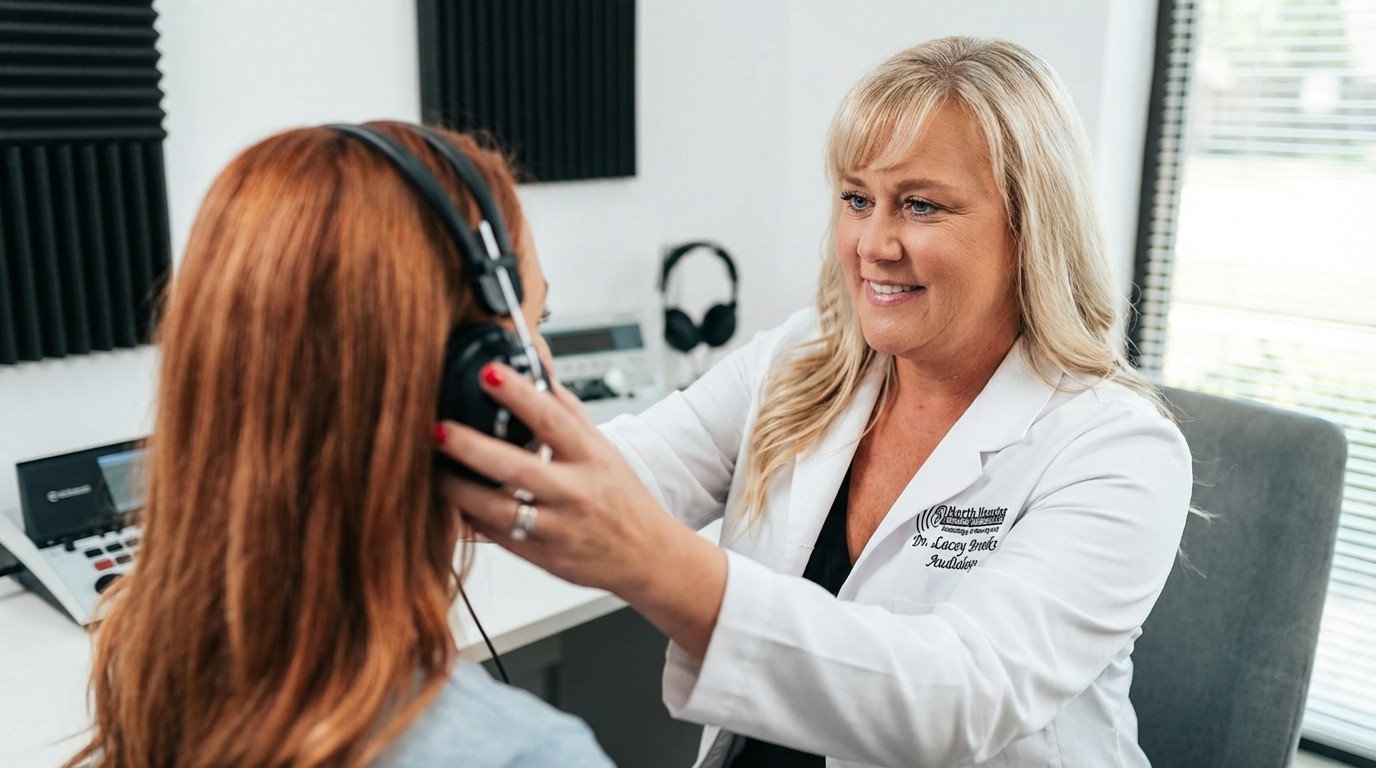
Our Neuro-Diagnostic Vestibular and Balance Tests
Acoustic Immittance Measures (Tympanometry):
Checks the health of your eardrum and middle ear, detecting fluid, perforations, or tumors by measuring how your eardrum moves in response to air pressure.
Acoustic Reflex Testing:
Assesses involuntary muscle contractions in the middle ear to help locate the source of hearing issues.
Audiometry:
Assesses your ability to hear different sounds, pitches, and frequencies, which helps us determine the extent of hearing loss and the best treatment options.
Caloric Testing (Air Calorics)
Assesses nerve function in the ear by introducing warm and cool air into the ear canal and recording your body’s response.
Electrocochleography (EcochG)
Detects excess fluid in the inner ear, aiding in the diagnosis of conditions like Meniere’s disease.
Electro-Oculography
Analyzes specific eye movements controlled by the brain’s balance centers. Abnormalities can indicate neurological issues.
Neuro-Diagnostic Auditory Brainstem Response (ABR)
Measures how well signals travel along the hearing nerve from the inner ear to the brain. ABR testing is especially useful for explaining one-sided symptoms.
Otoacoustic Emissions (OAE)
Evaluates the response of inner ear hair cells, providing insight into inner ear health.
Posturography
Measures how your visual, vestibular, and sensory systems coordinate to keep you steady. You’ll stand on a platform while we assess your body’s sway.
Rotary Chair Tests
A motorized chair records your eye movements as you move, providing detailed information about how your inner ears and brain work together to maintain balance.
Sensory Organization Performance (SOP) Test
Identifies the source of balance issues and helps determine your risk of falling.
Speech-in-Noise Testing
Measures how well you understand speech in noisy environments, revealing your true hearing ability.
Tinnitus Assessment
Performed by a tinnitus specialist to determine the type, pitch, and pattern of your tinnitus, and whether you may benefit from therapy.
Vestibular Evoked Myogenic Potential (VEMP)
Evaluates specific nerves connected to your balance system using gentle electrodes on the neck or around the eyes.
Video Head Impulse Test (vHIT)
Tests each of the six semicircular canals to see how your eyes and brain respond to quick head movements.
Videonystagmography (VNG)
Uses infrared goggles to track eye movements during a series of tests. This helps identify subtle inner ear problems and pinpoint the cause of vertigo or dizziness.
All these tests are quick, comfortable, and noninvasive. By combining them, we can get a complete picture of your hearing and balance health and help you find lasting relief.