

How to Know If You Have a Balance Challenge
You may be experiencing balance issues if you notice:
Frequent dizziness or lightheadedness
Sudden or unexplained vertigo (the feeling that you or your surroundings are spinning)
A sensation of unsteadiness, especially when walking or standing
Difficulty maintaining your balance, stumbling, or feeling off-balance
An increased risk of falling
Persistent ringing in your ears (tinnitus)
Changes in hearing and/or ear function
If any of these symptoms sound familiar, you could benefit from a professional balance screening. Early detection can help you regain confidence in your movements and reduce your risk of falls or injury.
What to Expect from Balance Testing
When you visit for a balance screening, you receive a comprehensive assessment of your vestibular system. This includes:
A review of your symptoms and medical history
Hearing tests to check for related issues
Simple, noninvasive tests to measure your balance and coordination
Personalized recommendations for next steps, whether that’s further testing, treatment, or advice for daily life
You benefit from a clear understanding of your balance health so you can take action with confidence.
We are a preferred provider of the American Institute of Balance

Types of Neuro-Diagnostic Vestibular and Balance Tests
Our comprehensive vestibular and balance testing protocols are designed to identify the underlying causes of dizziness, vertigo, imbalance, and other balance-related concerns.
Because the vestibular system is complex and involves the inner ears, eyes, nerves, and brain working together, multiple diagnostic tests are often needed to accurately evaluate function and pinpoint the source of symptoms.

Our evaluations may include:
Tympanometry – Assesses eardrum movement and middle ear function.
Acoustic Reflex Testing – Evaluates involuntary middle ear muscle responses.
Otoacoustic Emissions (OAE) – Measures inner ear hair cell function.
Auditory Brainstem Response (ABR) – Assesses hearing nerve and auditory pathway function.
Electrocochleography (EcochG) – Helps detect excess inner ear fluid and conditions such as Meniere’s disease.
Electro-oculography (EOG) – Evaluates eye movements controlled by balance centers in the brain.
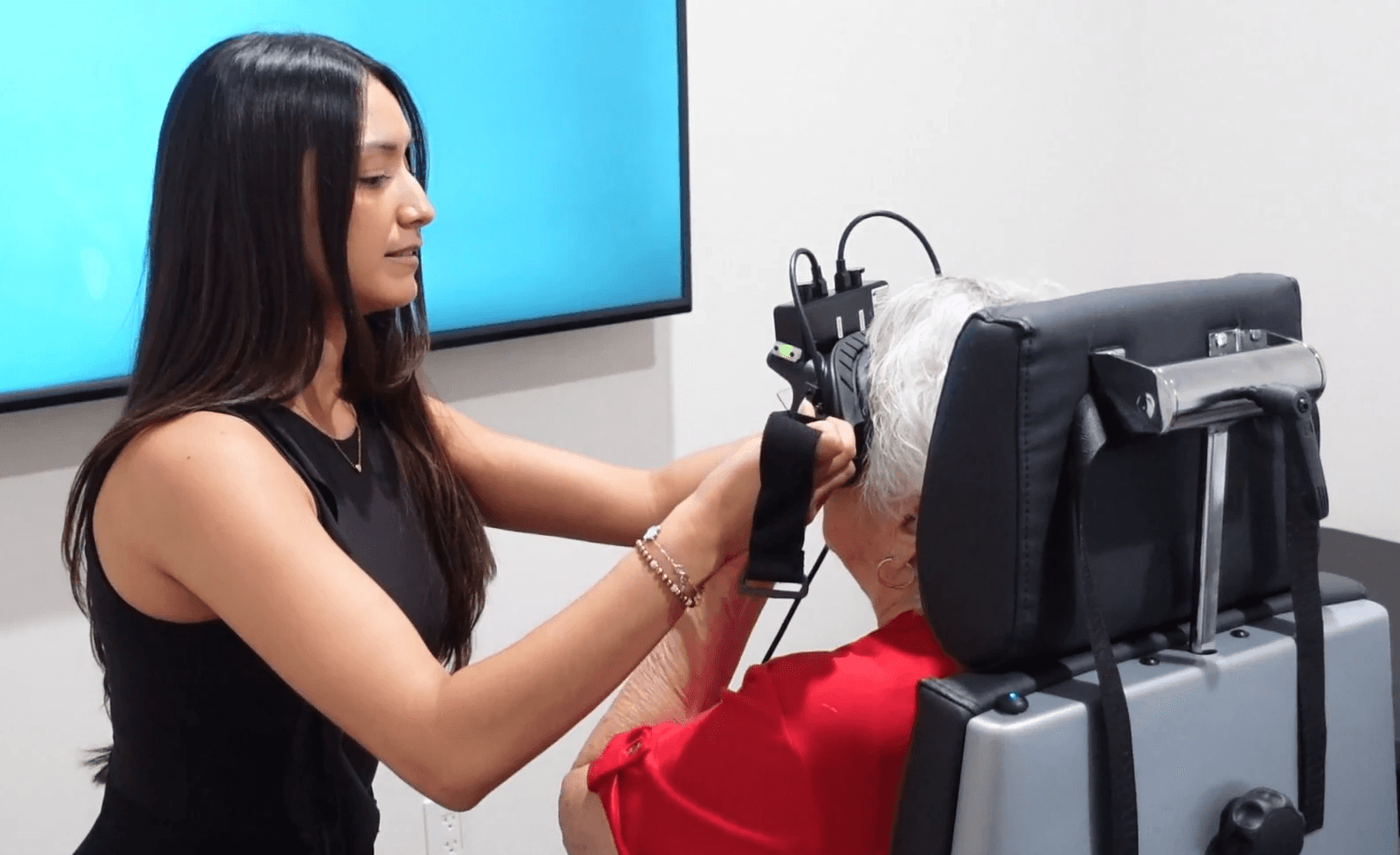
Videonystagmography (VNG) – Uses specialized goggles to measure eye movements and identify vestibular disorders.
Rotary Chair Testing – Provides detailed information about balance system performance and brain adaptation.
Posturography – Measures how the visual, vestibular, and sensory systems work together to maintain balance.
Sensory Organization Performance Testing (SOP) – Helps identify balance deficits and fall risks.
Vestibular Evoked Myogenic Potential (VEMP) – Evaluates specific vestibular nerve pathways within the inner ear.
Feeling dizzy can be unsettling and confusing. Dizziness comes in several forms, each with its own causes and symptoms.
Understanding the type you’re experiencing is the first step toward finding relief.
1. Visual Dizziness
When your eyes struggle to keep up with your surroundings, your sense of balance can suffer.
Visual dizziness often happens when there’s an eye muscle imbalance or poor vision. The brain depends on your eyes for balance cues, so anything that disrupts this connection can cause problems.
Classic examples include car sickness or sea sickness, where moving scenery confuses your brain’s balance center. Symptoms often include dizziness, nausea, and sometimes vomiting.
2. Inner Ear Dizziness
The inner ear plays a crucial role in both hearing and balance. If the balance part of your inner ear or its nerve connection to the brain isn’t working properly, dizziness can result.
Conditions like Meniere’s disease, labyrinthitis, vestibular neuritis, positional vertigo, migraines, and even tumors can all affect this area.
These issues often cause vertigo (a spinning sensation), imbalance, and nausea. Sometimes, you might also notice ringing in the ears (tinnitus) or hearing loss if the hearing part of the ear is involved.
3. Central Dizziness
Central dizziness starts in the brain’s balance center. When these areas aren’t functioning as they should, you might feel lightheaded, disoriented, or unsteady. In some cases, people even experience brief blackouts.
Causes include low blood sugar, reduced blood flow to the brain, strokes, migraines, multiple sclerosis, head injuries, tumors, and even natural aging.
Treatment focuses on addressing the underlying cause to restore your sense of balance.
4. Muscle-Joint Dizziness
Though less common, problems with your muscles, joints, or the touch sensors in your limbs can affect your balance. When these systems don’t work well, your body struggles to respond to movement, making it hard to stay upright.
Conditions like muscular dystrophy, severe diabetes, arthritis, joint replacements, or injuries can all contribute to this. This type of dizziness usually shows up as unsteadiness or difficulty walking.
Recognizing Common Symptoms
Dizziness and balance problems can show up in many ways.
Some symptoms to watch for include:
Staggering or difficulty walking
Blurry vision
Weakness or instability
Disorientation or confusion
Sudden or ongoing spinning sensation (vertigo)
Imbalance or unsteadiness
Motion sickness or motion intolerance
Lightheadedness or fainting
Frequent falls or suspected fall risk
Every symptom you notice is important. Sharing these details helps us understand your experience and tailor your care.
If you’re experiencing any of these symptoms, contact us to schedule an assessment. We’re here to help you regain your balance and confidence.


What causes balance disorders?
Balance disorders often result from problems within the inner ear, particularly the vestibular system. They can also be caused by certain medications, head injuries, infections, or underlying medical conditions such as low blood pressure or neurological disorders.
What are the symptoms of a balance disorder?
How is a balance disorder diagnosed?
Can balance disorders be treated?
Why should I get screened for balance problems?